
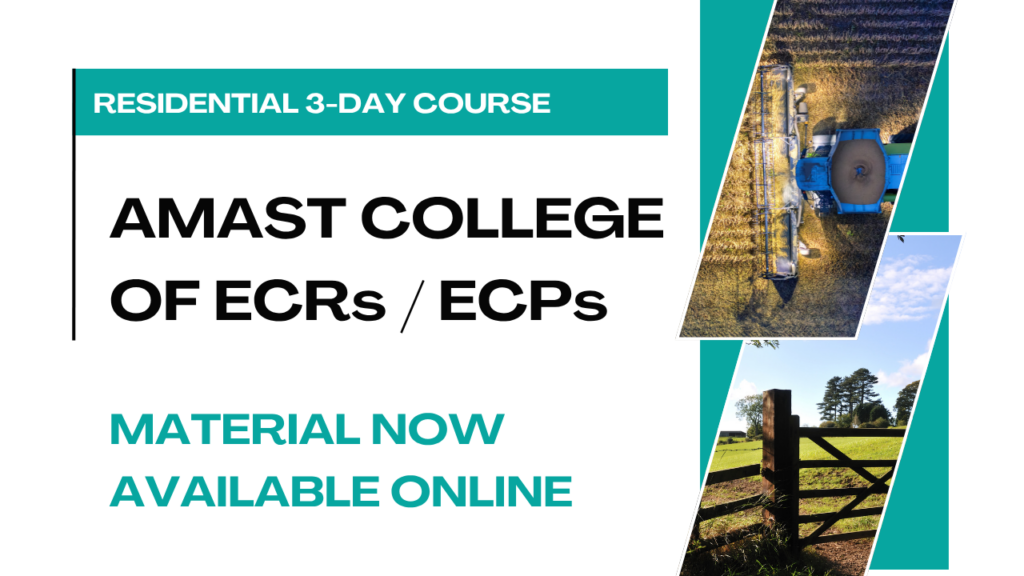
In March 2026, early career researchers and professionals from veterinary science, environmental science, social science, microbiology, and policy came together for three intensive days of training in transdisciplinary and participatory methods. The goal was to learn how to work across the disciplinary boundaries to tackle AMR effectively.
Training Resource
We have published the complete training resource from the inaugural AMAST College as a free, openly accessible website. Everything that participants worked through (the frameworks, the methods, the structured activities, the reflection tools) is now available to anyone who wants to use it.
Whether you attended the College or not, you can:
- Explore the full three-day programme, activity by activity, with the reasoning behind it
- Use the Participatory Action Research (PAR) framework to design research with farmers and stakeholders, not on them
- Apply the Transdisciplinary Research Design framework to build research questions that genuinely require multiple disciplines
- Read the communication guidance for reaching press, funders, journals, and the public
What is inside
The resource is structured around the College’s three-day arc, which was designed to build complexity layer by layer:
Day 1: Foundations. Understanding AMR as a systems problem. Building shared language across disciplines. Mapping own disciplinary position and its blind spots.
Day 2: Methods. Deep dives into Participatory Action Research and Transdisciplinary Research Design. Systems mapping. Working with farmers as genuine co-researchers.
Day 3: Application. Collaborative proposal development. Research communication for different audiences. Futures thinking and long-term career development (in collaboration with the Futures AMR Network – FAN).
Each section includes the actual frameworks given to participants, the facilitation notes, and the reflection questions used throughout the programme.
The resource is live now. We hope it is useful and, should you have any feedback, please do send us an email (amast@quadram.ac.uk)
The AMAST Network is funded by UKRI. This training resource was built as an open contribution to the AMR research community.